
How Is It That You Have No Faith? | What Does It Mean to Have Great Faith?
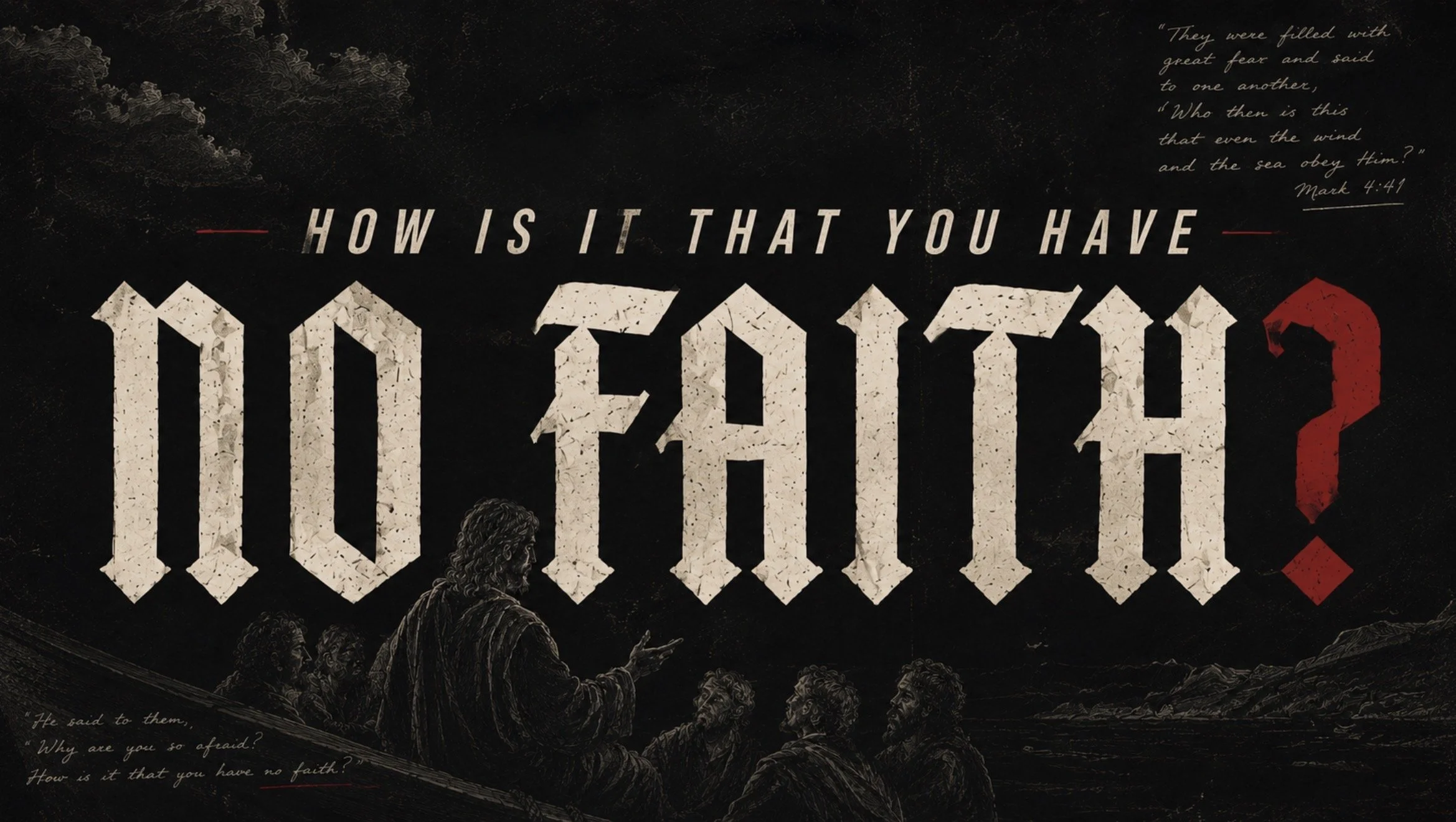
What Does It Mean to Have Great Faith?
When we talk about faith, we often talk about it as though it is something we possess in measurable amounts. Someone has a lot of faith. Someone else has a little. We look at another person and think, I wish I had faith like them. When something difficult stands in front of us, we may wonder whether we have enough faith to face it.
Those questions become heavier when we have prayed, believed, trusted God, and something still did not happen the way we expected. Somewhere in trying to make sense of the disappointment, we can begin to wonder: Did I not have enough faith?
Underneath these questions is an assumption we may not even realize we are making. We are thinking about faith primarily in terms of quantity.
How much faith do I have? How much do I need? How do I get more?
Jesus used language that seems to invite those questions. He spoke of no faith, little faith, and great faith. His disciples even asked Him to increase their faith. But rather than assuming those words simply describe different quantities, what if we pay attention to what Jesus actually identified when He used them?
Faith Begins With the One We Trust
Biblical faith is relational.
If I say, “I trust,” there must be someone or something on the other side of that statement. When we are talking about biblical faith, that relationship is ultimately with God. That means His character matters.
If I am going to entrust myself to God, I need to know whether God can actually be trusted.
Scripture repeatedly answers that question. In Deuteronomy 7:9, Moses calls Him “the faithful God.” God is not faithful because we believe He is faithful. Our faith does not make Him trustworthy, and our lack of faith does not make Him less trustworthy.
God is faithful.
That gives us our foundation: Biblical faith is a relational response to the character and revelation of God, whereby we become aware that He is faithful and entrust ourselves to Him.
But what does it actually mean to entrust ourselves to God?
What Jesus Called Great Faith
In Matthew 8, Jesus entered Capernaum and was approached by a Roman centurion whose servant was paralyzed and suffering terribly. Jesus responded that He would come and heal him.
The centurion told Jesus that he was not worthy for Jesus to come under his roof. Instead, he said, “only speak a word, and my servant will be healed.”
Notice what he did not do.
He did not tell Jesus how strongly he believed. He did not explain how much faith he possessed. He did not insist that he had eliminated every doubt.
In fact, the centurion did not talk about his faith at all.
He talked about Jesus.
He explained that he understood authority because he himself was a man under authority with soldiers under him. When he told one to go, that soldier went. When he told another to come, that soldier came.
The order matters. He did not begin by saying, “I am a man with authority.” He said, “I am a man under authority.”
His authority did not originate with him. He could legitimately operate in authority because he was himself under authority. His words carried the weight of something greater than himself.
Somehow, when this Roman officer looked at Jesus, he recognized authority.
Jesus did not need to enter his home. He did not need to stand beside the servant’s bed.
Only speak a word.
The centurion had received enough revelation of Jesus to reach a conclusion: When Jesus speaks, His word is enough.
When Jesus heard his response, He marveled and said that He had not found such great faith, even in Israel.
The centurion was not focused on the quantity of his faith. He recognized the authority of Jesus and responded accordingly.
What Jesus Called Little Faith
In Matthew 14, the disciples were again in a boat fighting against wind and waves. This time Jesus was not with them. He had remained behind to pray while they crossed the water.
During the night, Jesus came toward them walking on the sea.
Peter responded, “Lord, if it is You, command me to come to You on the water.”
Peter did not simply decide that because Jesus was walking on water, he should try it too. He asked Jesus to commandhim.
Jesus answered:
Come.
And Peter came.
Before focusing on the fact that Peter eventually sank, recognize what happened first. Peter climbed out of the boat and walked on water toward Jesus.
Jesus spoke, and Peter responded.
There was faith operating in Peter’s response.
But then Peter saw the strength of the wind, became afraid, and began to sink. The wind had already been there. The waves had already been there. The circumstances did not change.
Peter’s response did.
Jesus had said, “Come,” and initially His word determined Peter’s response. Then Peter saw something else that appeared powerful.
The wind was real. The waves were real. Faith did not require Peter to pretend otherwise. But Peter had already seen Jesus exercise authority over wind and waves. The storm had never possessed greater authority than Jesus.
It only appeared powerful enough to begin carrying greater weight in Peter’s response than the word Jesus had spoken.
Jesus caught Peter and asked, “O you of little faith, why did you doubt?”
The word translated “doubt” carries the idea of wavering or hesitating. Peter did not move from having faith to having none. His response wavered.
Little faith can look like beginning to respond to Jesus according to His word and then wavering when something else appears powerful enough to carry greater weight in our response.
“Lord, Increase Our Faith”
In Luke 17, Jesus told His disciples that if someone sinned against them and repented, they were to forgive. If that person did it seven times in the same day and returned seven times saying, “I repent,” they were to forgive again.
Their response sounds familiar:
“Lord, increase our faith.”
In other words, If You are asking us to do that, we are going to need more faith.
It is often the same conclusion we reach when something seems impossible. If I had more faith, maybe I could do this. If I could accumulate enough faith, maybe I could face what is in front of me.
But notice something important.
The disciples introduced the idea that they needed more faith. Jesus did not.
Jesus had given them a command. They concluded that the solution was an increased quantity of faith.
Jesus responded by pointing toward something incredibly small: a mustard seed. Then He described a servant carrying out what his master had commanded.
Once again, the conversation returns to authority, a word, and a response.
Authority, Word, Response
Put the three encounters beside one another.
The centurion said, “Only speak a word.” He understood what it meant to be under authority and recognized the authority of Jesus. Jesus called his response great faith.
Peter said, “Command me to come.” Jesus said, “Come,” and Peter came. But when something else appeared powerful enough to outweigh Jesus’ word in his response, Peter wavered. Jesus called it little faith.
The disciples asked Jesus to increase their faith, and Jesus brought the conversation back to a master, a servant, a command, and a response.
The same pattern continues appearing:
Authority. Word. Response.
This does not mean faith is simply another word for obedience. Faith remains a relational response to the character and revelation of God whereby we become aware that He is faithful and entrust ourselves to Him.
But now we begin to understand what entrusting ourselves to Him involves.
If I have entrusted myself to Jesus, then His authority matters in my response.
What would it mean to say, “Jesus, I trust You,” while simultaneously saying, “But Your word does not determine my response”?
Faith Places Me Under His Authority
We live in a culture that increasingly treats freedom as the absence of authority.
Nobody tells me what to do. I determine what is right for me. I determine what is true for me. I answer to myself.
If we are continually discipled to believe that freedom means becoming our own highest authority, eventually we will bring that posture into our relationship with Jesus.
We may want Jesus. We may want His promises and blessings. We may want to operate in His power and even His authority.
But we may not actually want to live under His authority.
The centurion understood something we need to recover. He did not possess authority because nobody had authority over him. He operated in authority because he was under authority.
Jesus called that great faith.
Perhaps this also explains our attraction to thinking about faith primarily in terms of quantity. If faith is something I possess, perhaps it becomes something I can control. Maybe if I can accumulate enough faith, I can produce the outcome I want.
But then we have turned biblical faith upside down.
Instead of faith being my relational response to God, faith becomes something I possess to produce a response from God.
Biblical faith does not bring God under my authority.
Biblical faith places me under His.
And that is good news because the One who possesses all authority is also the One Scripture calls the faithful God.
His character can be trusted. His word can be trusted. Because He is faithful and because He has all authority, we can entrust ourselves to Him.
What Has Authority Over Your Response?
Peter’s story leaves us with a question:
What has authority over my response?
The wind Peter faced was real. The waves were real. The danger was real. Faith did not require him to deny any of it.
But something that appeared powerful began carrying greater weight in his response than the word of the One who actually possessed authority over it.
The storm never had more authority than Jesus.
And neither does ours.
So what is loud in your life right now? What seems powerful? What situation feels as though it carries more weight than the word of God? What has become so real that fear has begun determining your response more than trust?
Your storm may involve a relationship, work, finances, an uncertain future, an injury, a diagnosis, disappointment, or something else entirely.
Faith does not require you to deny the reality of what you are facing.
It requires you to remember who has authority over it.
Maybe growing in faith, then, is not simply getting a larger quantity of something inside of us.
Maybe growing in faith looks like more of our lives entrusted to the authority of Christ.
More of our responses determined by His word instead of the storm. More of our lives placed under His authority. More of us trusting the One we have discovered to be faithful.
And when the Holy Spirit reveals an area where we have wavered, we can do exactly what Peter did.
Peter began sinking and cried, “Lord, save me!”
Immediately, Jesus reached out and caught him.
Peter returned to the One who had spoken, the One whose authority had never changed.
If there is an area of your life where you have wavered, the invitation is not to manufacture more belief or force yourself to believe harder.
Come back to Him.
Come back to the One who is faithful. Come back under His authority. Entrust that place to Him again.
The storm may still be loud. It may still be real. It may still appear powerful.
But the storm does not have the final authority.
Jesus does.
And because God is faithful and God has all authority, we can entrust ourselves to Him.