
How Is It That You Have No Faith? | Knowing God Is the Foundation of Faith
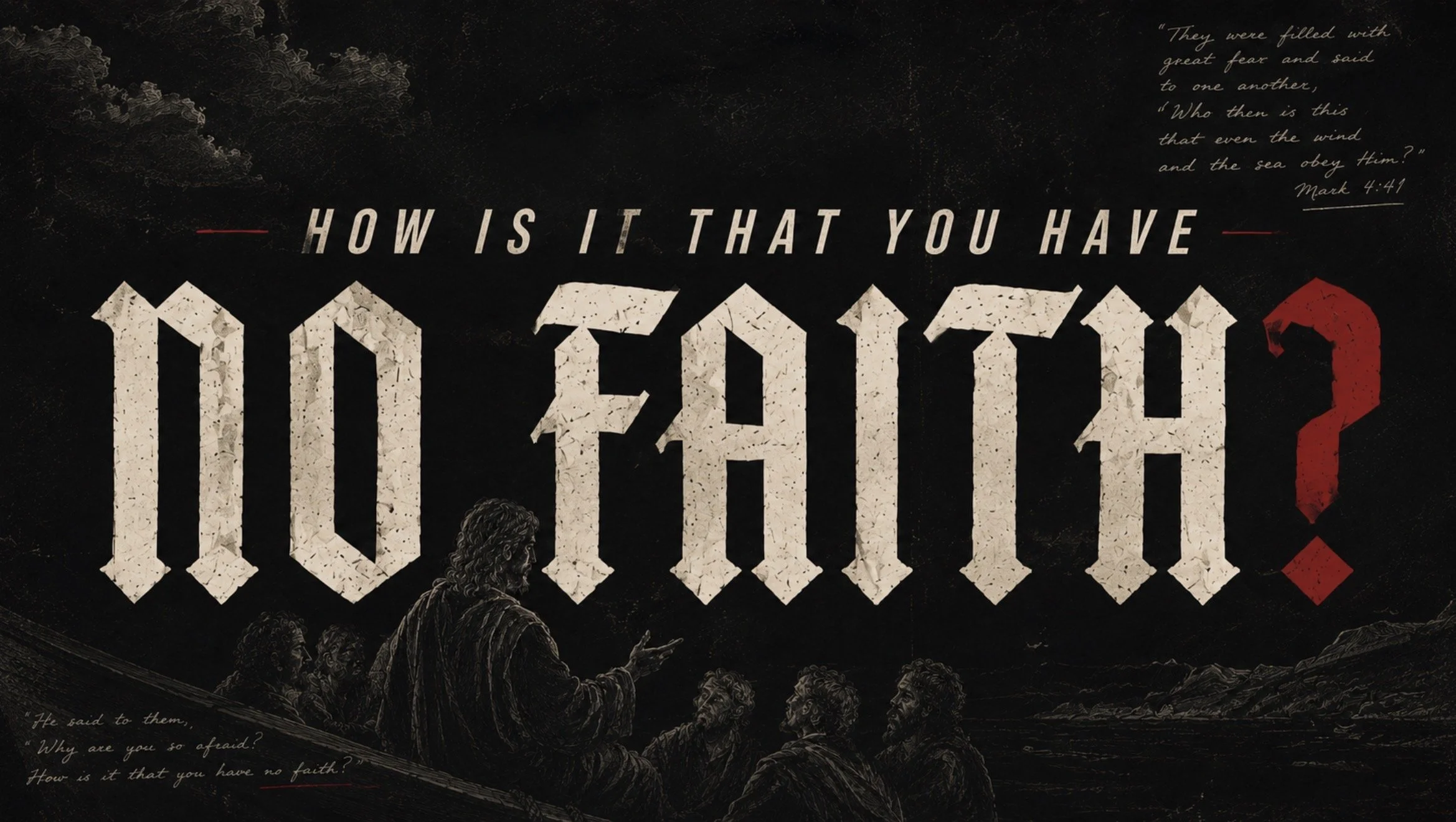
Knowing God Is the Foundation of Faith
How deeply can you trust someone you do not deeply know? That question reaches into the heart of biblical faith. Faith is not positive thinking, pretending circumstances are better than they are, or convincing ourselves strongly enough that something will happen. Biblical faith involves entrusting ourselves to God in response to who He has revealed Himself to be and what He has spoken, because He is reliable and trustworthy.
Faith begins somewhere deeper than our ability to believe. It begins with God Himself. God is faithful whether we trust Him or not, and He possesses authority whether we recognize it or not. Our faith does not make Him trustworthy. Faith is our response as we become increasingly aware that the God who has revealed Himself is worthy of our trust. But if faith means entrusting ourselves to God because He is trustworthy, how can we deeply trust Him without continuing to deeply know Him?
Knowing About God Is Not the Same as Knowing God
Few generations in Scripture witnessed more dramatic acts of God than the Israelites who came out of Egypt. They watched God confront Pharaoh. They experienced the plagues and Passover. They walked away from centuries of slavery and eventually stood between the Red Sea and an approaching Egyptian army with nowhere to go. Then God divided the water, and they walked through on dry ground. These were not stories they inherited from previous generations. They experienced them.
Yet when God described what He was doing, He revealed that rescue from Egypt was not the ultimate destination. In Exodus 19:4, God tells Israel that He carried them on eagles’ wings and brought them to Himself. God was bringing Israel out of slavery, but He was bringing them out in order to bring them near.
Then Israel arrived at Mount Sinai. As God revealed His presence through thunder, lightning, fire, smoke, and the shaking mountain, the people were afraid. They told Moses to hear from God for them. Exodus 20:21 captures an important contrast: the people stood far away while Moses drew near to where God was. Both Israel and Moses witnessed the acts of God, but their postures began to look very different.
Israel continued experiencing God’s provision. They ate manna, drank water from a rock, and followed the cloud by day and fire by night. Moses, however, kept drawing near. By Exodus 33, Scripture says the Lord spoke to Moses face to face, as a man speaks to his friend. It is there that Moses makes an extraordinary request: “Show me now Your way, that I may know You” (Exodus 33:13).
Moses had already seen extraordinary miracles, yet he was not asking for another one. He wanted God’s ways because he wanted to know God. God responded by revealing His character, proclaiming Himself merciful, gracious, longsuffering, and abounding in goodness and truth. Psalm 103:7 later summarizes the distinction beautifully: God “made known His ways to Moses, His acts to the children of Israel.” The acts mattered, but the acts were supposed to reveal the One behind them.
The Act Was Never Supposed to Be the Destination
Israel’s problem was not a lack of evidence. They had seen God’s power and experienced His provision. Yet when they reached the edge of the Promised Land and saw fortified cities and giants, what stood in front of them began carrying more weight than everything God had already revealed behind them.
God asks in Numbers 14:11, “How long will these people reject Me? And how long will they not believe Me, with all the signs which I have performed among them?” Psalm 78 recounts the Red Sea, God’s guidance, and water flowing from the rock, yet Israel still asked, “Can God prepare a table in the wilderness?” They had watched Him divide a sea, but a new circumstance was capable of putting the question back on the table: Can God do this?
That can happen when the acts of God never lead us into deeper knowledge of God. We receive His provision, thank Him for getting us through the crisis, and continue with our lives. Then another crisis arrives, and suddenly we need another act. But the act was never supposed to be the destination. His provision reveals the Provider. His mercy reveals His heart. His faithfulness reveals that He is faithful. His power reveals His authority. The invitation is not merely to know what God has done, but to know the God who did it.
From “Can God?” to “If You Can”
Centuries later, another generation stood face to face with Jesus, and remarkably, the same question surfaced again. In Mark 9, a father had brought his suffering son to Jesus’ disciples, hoping they could deliver him from the spirit tormenting him.
These disciples were not inexperienced. Jesus had already given them authority over unclean spirits. They had cast out demons and seen sick people healed. They had watched Jesus calm storms, multiply food, heal the sick, and raise the dead. They knew what the authority of Jesus looked like because they had both witnessed it and participated in it. But this time they could not deliver the boy.
Jesus responded to the scene with words that echo Israel’s history: “O faithless generation, how long shall I be with you?” Then the father brought his son to Jesus and said, “If You can do anything, have compassion on us and help us.”
The language had changed, but the question was remarkably similar. Israel had asked, “Can God?” Now this father stood face to face with Jesus and said, “If You can.” Jesus challenged the premise of the question, and the father responded with one of the most honest prayers in Scripture: “Lord, I believe; help my unbelief!” He did not hide the part of himself that was struggling. He brought that to Jesus too.
Jesus delivered the boy, and afterward the disciples privately asked Him, “Why could we not cast it out?” Matthew records Jesus pointing toward their faith, while Mark records Him saying that this kind could come out by nothing but prayer. Put those answers together and an important question emerges: What does prayer have to do with faith?
Prayer Is More Than Asking God to Act
Prayer can easily become something we primarily use when life goes wrong. We need healing, so we pray. We need provision, so we pray. We are overwhelmed, afraid, uncertain, or facing something impossible, so we pray. There is nothing wrong with bringing those needs to God. Jesus teaches us to ask.
The danger is allowing prayer to become nothing more than a way of obtaining another act of God. God acts, the crisis passes, we are thankful, and then we move forward until the next crisis requires another act. If we are not careful, we can begin repeating Israel’s pattern without realizing it.
Prayer was never intended to be merely a technique for producing an outcome. Prayer is relationship. It is communion with God. It is drawing near. It is one of the primary ways we pursue His heart and learn His ways. Jesus says in Matthew 7:7, “Ask, and it will be given to you; seek, and you will find; knock, and it will be opened to you.” We are not pursuing a Father who refuses to be found. Jesus tells us to seek and promises that we will find.
Prayer for God to act is good, but our asking should lead us into seeking. The answer should lead us closer to the One who answered. His provision should teach us something about our Provider, and His faithfulness in one season should reveal something about His character that we carry into the next. God Himself is the destination.
This is where prayer and faith begin to meet. The more we seek Him, the more we know Him. The more we know His heart, the more we discover that He is trustworthy. The more we know His ways, the more clearly we recognize His authority. As we increasingly know God rather than simply knowing things about Him, entrusting ourselves to Him becomes a more natural response.
Delegated Authority Never Becomes Independent Authority
John does not record the story of the boy in Mark 9, but he records words from Jesus that help us understand what happened. In John 15, Jesus tells His disciples, “Abide in Me, and I in you.” He describes Himself as the vine and His followers as branches. A branch cannot bear fruit by itself; it must remain connected to the vine. Then Jesus makes the statement, “Without Me you can do nothing.”
Those words take on particular significance alongside the disciples’ question, “Why could we not?” Jesus had truly given them authority, and they had genuinely operated in it before. But previous success could never eliminate present dependence. Delegated authority never becomes independent authority.
A branch does not become independent of the vine because it produced fruit yesterday. Past experience does not change present dependence. The authority still came from Jesus, the power still belonged to Jesus, and the disciples still needed Jesus.
Just a few verses later, Jesus says, “If you abide in Me, and My words abide in you, you will ask what you desire, and it shall be done for you.” The order matters. The asking flows from abiding. Jesus does not separate extraordinary authority from intimate dependence upon Him. The authority He gives never becomes something we possess independently from the One who gave it.
The Invitation Is to Draw Near
At Sinai, the people essentially told Moses, “You go near. You hear God. Then come back and tell us what He said.” We can reproduce the same pattern today when we expect pastors, leaders, teachers, or someone we consider especially spiritual to draw near to God for us. We listen to what they discovered and can slowly begin depending upon their relationship with God to feed ours.
But God told Israel, “I brought you to Myself.” Not merely Moses. Jesus says, “Abide in Me.” That invitation is not merely for pastors, church leaders, or people who have followed Jesus longer than we have. The invitation to draw near belongs to every follower of Jesus.
There will always be more of His heart to discover, more of His character to know, and more of His ways to learn. This is not a formula where more prayer guarantees the particular outcome we want. Knowing God Himself is the goal. Yet something happens as we continue knowing Him: faith increasingly becomes the natural response of a person becoming intimately acquainted with Someone who has revealed Himself to be completely trustworthy.
Maybe you have known many of God’s acts. Maybe you have watched Him provide, heal, restore, guide, or carry you through things you could not navigate alone. The invitation is not to forget those acts, but to follow them back to Him. Let His faithfulness teach you about the Faithful One. Let His provision reveal the Provider. Let His authority draw you into deeper dependence upon the One who possesses it.
Ask, seek, knock, draw near, and abide. Because God has never merely wanted you to know what He can do. He has always wanted you to know Him.