
Temple & Table (WEEK 2): Why Church Isn’t Forming Us the Way We Thought It Would
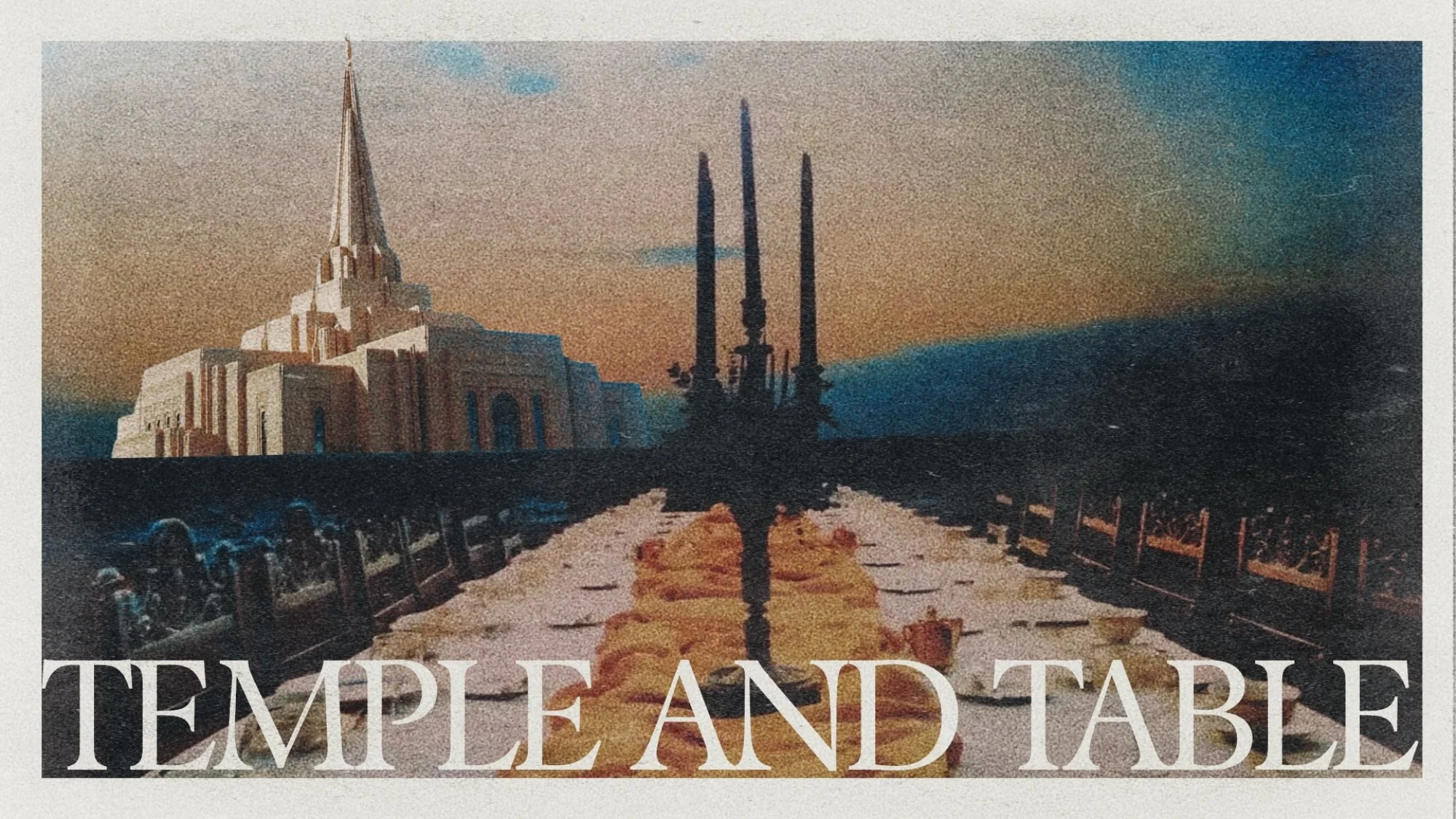
Why Church Isn’t Forming Us the Way We Thought It Would
There’s a tension a lot of people feel…
but don’t always know how to articulate.
You show up to church.
You listen.
You worship.
And for a moment, it feels meaningful.
But somewhere between Sunday and the rest of your week…
it starts to fade.
Not completely.
Just enough that you begin to notice something:
You’re hearing truth…
but you’re not sure you’re actually changing.
And if you’re honest, that can be frustrating.
Because it’s not for lack of effort.
You’re there.
You care.
You’re trying.
So why does it sometimes feel like your faith is informing you…
but not forming you?
The Question Beneath the Surface
At some point, whether we say it out loud or not,
a question starts to rise:
“Is this all it’s supposed to be?”
Not in a critical way—
just honestly.
Because deep down, we know faith was meant to do more.
Not just give us knowledge.
Not just provide moments.
But actually transform us.
And yet, Scripture itself acknowledges this tension.
In Hebrews 5, the writer says:
“Though by this time you ought to be teachers, you need someone to teach you again the basic principles… You need milk, not solid food.” (Hebrews 5:12)
In other words—
it’s possible to be around truth…
and still not mature.
A Subtle Shift We’ve Made
Here’s what makes this complicated.
Nothing about gathering is wrong.
In fact, Scripture commands it:
“And let us consider how to stir up one another to love and good works, not neglecting to meet together…” (Hebrews 10:24–25)
Gathering matters.
But notice what the verse actually says.
Not just meet together…
But:
“Stir one another up to love and good works.”
Which means the goal was never just attendance.
The goal was always formation.
When Faith Becomes Something We Attend
Without realizing it, it’s easy for faith to drift into something we attend.
We measure consistency by showing up.
We measure growth by what we’ve heard.
But those aren’t the same as transformation.
Because you can sit in a room full of people
and still remain unknown.
You can hear truth
and still keep parts of your life untouched by it.
And Scripture gives us language for that reality.
Paul writes:
“Do you not know that you are God’s temple and that God’s Spirit dwells in you?” (1 Corinthians 3:16)
But the word you there isn’t singular—it’s plural.
It’s you all.
Which means the temple isn’t just an individual experience…
it’s a people gathered together, carrying God’s presence.
What We Don’t Always See
When you look at the life of Jesus, something becomes clear.
Yes, He taught crowds.
But that’s not where the deepest formation happened.
It happened in closer spaces.
Around tables.
In Luke 5, Jesus calls Levi—a tax collector, rejected and avoided.
And then this happens:
“Then Levi held a great banquet for Jesus at his house, and a large crowd of tax collectors and others were reclining at table with them.” (Luke 5:29)
And when the religious leaders questioned it, Jesus responded:
“It is not the healthy who need a doctor, but the sick. I have not come to call the righteous, but sinners to repentance.” (Luke 5:31–32)
Jesus didn’t wait for people to change before sitting with them.
He met them in the middle of their lives.
Why That Matters More Than We Think
Because Scripture shows us something we often miss:
Transformation does not happen from a distance.
But it also doesn’t happen automatically through proximity.
You can sit at a table and still hide.
That’s why openness matters.
James writes:
“Confess your sins to one another and pray for one another, that you may be healed.” (James 5:16)
Healing isn’t just found in hearing truth.
It’s found in being known.
The Pattern We Were Given
When the early church began, they didn’t just gather occasionally.
They lived differently.
Acts 2 describes it this way:
“And they devoted themselves to the apostles’ teaching and the fellowship, to the breaking of bread and the prayers.” (Acts 2:42)
And then just a few verses later:
“And day by day, attending the temple together and breaking bread in their homes…” (Acts 2:46)
Temple and table.
Public gathering…
and shared life.
And it didn’t stop there:
“Every day, in the temple and from house to house, they did not cease teaching…” (Acts 5:42)
This wasn’t a program.
It was a rhythm.
What Changed Over Time
Over time, something shifted.
Not all at once.
Not intentionally.
But gradually.
As the church grew—especially after Constantine the Great legalized Christianity—the church began gathering in larger public spaces.
That allowed more people to gather.
But it also made it easier to:
Be present… without being known
Hear truth… without applying it
Sit in rows… instead of living in relationship
And over time, formation changed.
And Now We Feel It
That quiet frustration many people carry?
Scripture helps us understand it.
Because the early church wasn’t built on attendance.
It was built on shared life.
Acts 4:32 says:
“Now the full number of those who believed were of one heart and soul…”
Not just gathered.
United. Known. Formed together.
Where This Is All Going
At the end of the story, Scripture gives us a picture of what everything is moving toward.
“Blessed are those who are invited to the marriage supper of the Lamb.” (Revelation 19:9)
A table.
Not rows.
Not distance.
But restored relationship.
From Genesis to Revelation, God has always been drawing people closer.
Not just to Himself…
but to one another.
So What Does That Mean For Us?
It means the goal was never just to attend.
It was always to become.
And becoming requires more than proximity.
It requires openness.
It requires people in your life who can see you, challenge you, and walk with you.
Not perfectly.
But honestly.
The Invitation
For some, the next step isn’t complicated.
It’s just uncomfortable.
Letting someone actually know you.
Stepping into a space where you can’t hide.
Choosing depth over distance.
Because what many people are looking for in their faith…
might not be found in more content.
But in more connection.
Closing Thought
You were never meant to walk this alone.
And faith was never meant to stay at the surface.
There’s more available.
Not just to understand…
but to experience.
And it might just begin
with pulling up a chair.